Blog

  • It Can Happen Here and It Is

    When Fascism Comes to America

    I just finished watching the film Nuremberg, a 2025 film co-produced and directed by James Vanderbilt. The movie is based on the 2013 book, The Nazi and the Psychiatrist by Jack El-Hai, and follows U.S. Army psychiatrist Douglas Kelley (Rami Malek) who is seeking to carry out an assignment to investigate the personalities and monitor the mental status of Hermann Göring (Russell Crowe) and other high-ranking Nazis in preparation for and during the Nuremberg trials. It is a good movie, though not great movie, but I do suggest watching it.

    What interested me most while watching this film were two things. The first was the visceral reaction I had to the real footage of the Holocaust survivors. As the movie moves into a scene where the Nuremberg trial judges will see the films taken from the various captured camps, I knew what these judges would witness. Most of us have seen many times these photos and films made by the military at these camps. But I forget each time I see them, how badly I will be affected. The brain is a marvelous thing. It can take truly horrible incidents and scenes and make them a bit less vibrant and terrifying. It’s a way for the brain to cope with living in an often violent world. But when you see these scenes and images of the camp survivors and the dead, you cannot help but be torn in two once again. By the end of this scene in the movie, I had tears in my eyes. My brain may blunt the sharp edges of trauma over time, but all it takes is to see the horror again to turn those blunt edges back into razor blades.

    As I continued to watch the movie, I remarked that all these Nazis, these evil men, were just men. Most had families with wives they loved and children to whom they were devoted. They thought that what they were doing was the best for Germany and, of course, for themselves. Somehow, they convinced themselves that killing 6 million Jews, and untold numbers of LGBTQ+ individuals, Romani, disabled people, and political dissidents was their path forward to greatness. They knew, Hitler knew and said, that what Germany needed was a common enemy to hold his country together, to give them a mission to bring back German excellence. Hitler chose the Jewish people as this enemy, people who made up only 1% of German population at the time. The Nazis used people to achieve a political goal, not just used them but destroyed them throughout Europe. And in a sickening way, it worked. Germany nearly won World War 2.

    These men, these family men, did not look evil. They had no horns, no evil grins like in comic books. They were just average men. But when the chance came for power and prestige, they did the unthinkable to try and achieve it. They did things that we thought could never happen here in the United States.

    I admit that I do not understand the Nazis. And naively, I thought I would never have to, since what happened then could never happen here. I believed that the Nazis and their Holocaust occurred in the past, and people would have learned where authoritarian/fascism takes a society.

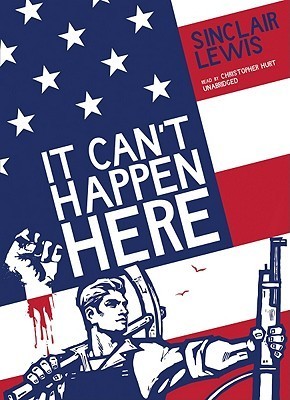
    In 1935, Sinclair Lewis published the book entitled It Can’t Happen Here. The book, written during the rise of fascism in Europe, followed a demagogue, who was elected President of the United States after fomenting fear and promoting a return to patriotism and “traditional” values. He took unilateral control of the government and imposed totalitarian rule with the help of a ruthless paramilitary force. Thus he begins his reign of his new, great society. But in this new, great American society, Congress loses its power, dissidents are incarcerated in concentration camps, and women and people of color lose many of their rights.

    Sounds familiar? I hope so. Just look at today’s news to see Sinclair Lewis’ prediction in action. Lewis once said that not only could fascism come to the United States, it was inevitable.

    So here we are right now in the United States at the intersection of the movie, Nuremberg, and the book, It Can’t Happen Here. And daily we see normal people: family members, co-workers, and neighbors, who think that the average-looking men and women that now sit atop our government are not evil because, just as in Nazi Germany, these people look just like they do and want to bring the country back to some imagined glory.

    To achieve their glory and prestige, today’s administration took pages out of Hitler’s and Lewis’ play-books. They need an ‘other’, an outcast society within our society to keep the citizens riled up and motivated. Trump has had many ‘others’ to choose from: immigrants, DEI, women, and transgender people, all whom have recently lost rights in our society. There are concentration camps in many states that representatives from Congress cannot visit, and where an untold number of people have died. We have ICE, the paramilitary wing of Trump’s forces, whose job is to scare the population of this country into compliance.

    It is early days yet, in Trump’s reign. It can happen here. It will happen here if we let it. We know Trump’s tactics can work because we have seen them work in numerous countries throughout the world. But, and most importantly, I remember that there is also hope. We did see and learn from history. Many of us know where this path will lead, and we do not want to go there. So we protest and write our legislators. We sue. Lawyers and judges still continue to fight to maintain the Rule of Law.

    In one of my favorite scenes in the movie, Nuremburg, Howie, the psychiatrist’s translator said this in regards to the Nazi regime: “Do you wanna know why it happened here? Because people let it happen. Cause they didn’t stand up until it was too late.”

    I shall do my best to not let it happen here, to stand up before it’s too late, and so many others are doing their part far better than I. People by the thousands stood up in Minneapolis, in Los Angeles, and all over the United States.

    “It Will Not Happen Here!” I remind myself as the movie ended. I do not wish to live in a world devised by Hitler and the Nazis, nor in the pages of Sinclair Lewis’ book. Yes, there are evil people in this country, people who look just like everyone else, and say they want the very best for the citizens. They wave the flag while denigrating the people that make up this country. They say, “Make America Great Again”, and then do the very opposite. They say that they support the people, but then terrorize them with paramilitary troops and lock them into concentration camps. They pass bills that restrict the rights of women, people of color, disabled people, and LGBTQ+ people. And now they start wars in foreign countries so that we do not notice how bad our country really is and in hopes that a war will reignite the will of the American people.

    But a vast majority of Americans see those in charge at the White House for who and what they are. They want power and prestige, and they are willing to get their power and prestige by standing on the backs of their own people. We are at a time of a possible inflection point. Soon elections will take place. And if the American people succeed, we, too, might have our own version of the Nuremberg trials.


    “But he saw too that in America the struggle was befogged by the fact that the worst Fascists were they who disowned the word “Fascism” and preached enslavement to Capitalism under the style of Constitutional and Traditional…American Liberty.

    • Sinclair Lewis – It Can’t Happen Here

    “When and if fascism comes to America it will not be labeled “made in Germany”; it will not be marked with a swastika; it will not even be called fascism; it will be called, of course, “Americanism”“…

    • Professor Halford E. Luccock of the Divinity School of Yale University – 1938

    Fascism would come to this country, but it would appear in another guise. It would come wrapped in the flag claiming to be a savior of democracy.

    • Rev. Huey Long, 1970
  • Where Is MY Mr. Roger’s Neighborhood?

    I want to go home.

    The problem I find is that I am sitting at the desk in my house. I am home, or should feel like I am home. But I don’t. This morning I feel the weight of living in the United States and on this planet crushing my soul.

    Today I am the true curmudgeon. I have looked at too much social media; less than a half an hour. I see the pointless war with Iran, our crazy, entirely detached Dear Leader talk absolute nonsense, and more attacks on the LGBTQ community. I see these, and I feel like I can do nothing.

    Don’t get me wrong. I write to legislators and sign petitions. On occasion, I even call legislators. I post, I write this blog. But on many days, it doesn’t feel like enough. What I want is to be on the streets. I want to scream my rage to power with others.

    But I am severely chronically ill. Most days over the last decade, I have spent my entire day in bed in a dark room feeling like I am dying. Not only do I not have the energy to protest, but rarely have the energy to do more than get up to use the bathroom. I have had a constant headache for over 20 years, severe brain fog, full-body pain…it feels like I’ve had a serious flu for decades. My great escape from my dark room is often to see my doctors; but, if I am lucky, I can put enough energy together to go out to see my family, go out to eat, or see friends once a month. But recently, even that has been too much.

    So I am angry and bored. My life is illness, and I grieve the life I want. I want to be healthy and active. I really want to be out on the streets protesting, being an activist for those of us in the U.S. who need and want change.

    I want to go home.

    I want to live in a country that extends the same rights and freedoms to everyone, regardless of skin color, religion, gender, or disabilities. I want to feel safe instead of scared that we are the greatest contributor to global climate change that may kill us all. I want children to feel safe from all forms of violence. I want our government to care for its citizens, not just how to make money. I want and I want. But to be honest, I want the world of Mr. Rogers. Naïve? Absolutely. Nevertheless, Mr. Rogers showed us how to be the best humans we can be. We can be better, do better.

    But the curmudgeon in me knows that wanting does little without action, and I have very little energy left for much beyond surviving. So I write in this dark room, not really for others to read, but so I can survive the wanting.

    I want to go home to a place that has never existed except for in books, Star Trek, and with Mr. Rogers. I want safety and peace.


    For all of you who can and do fight the daily battle to change this country, I am fully indebted. You are doing the work that will make this country a better place to live. I wish I could be there with you.

    Good morning to another day. May we all do our best, regardless of what that may be.

  • United States Society vs Trans Women

    If you have been paying attention to U.S. society over the last fifteen years, you will have noticed that the U.S. media and U.S. politicians believe we have a transgender ‘problem’. Studies of major news outlets (e.g., Pew Research Center, Media Matters) show roughly a 400–600% increase in the volume of transgender‑related coverage from 2010 to 2023.

    Again, if you have been paying attention, you will have noticed that over 90% of these media outlets’ reports have been about transgender women. However, the Williams Institute at UCLA on August 20, 2025, published a statistical study on the U.S. transgender population in which they noted that transgender men constitute 34.2% of the transgender population, while transgender women constitute only 32.7% of the transgender population. (The remaining 33.1% of the transgender population was comprised of non-binary individuals.) Given those numbers, one would expect that at least 50% of the media coverage would be given over to the ‘problem’ of transgender men in the United States, but it is not. In addition, many of the biggest political debates about transgender rights center on transgender women, specifically: safety issues of cis-gender girls and women, transgender women’s participation in women’s sports, and access to women’s bathrooms. The question may be asked: Why?

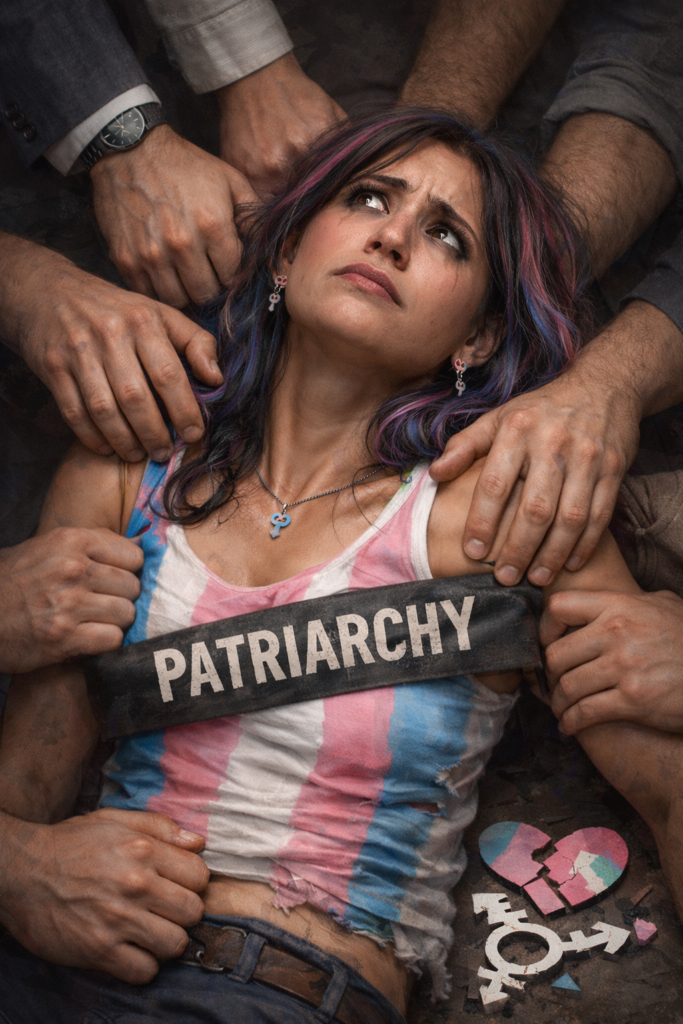
    It is often easy to answer this question with one simple answer: patriarchy. But what does that really mean in this context of transgender women and men in media coverage and in the political arena? Why are transgender women considered a ‘problem’ to be analyzed and solved, while transgender men are largely ignored?

    The Cambridge Dictionary defines patriarchy as “society in which the oldest male is the leader of the family, or a society controlled by men in which they use their power to their own advantage”. In the United States, both parts of the definition applies. In many families in the U.S., men are considered the primary breadwinners, the leaders of their family, and often, the spiritual leader of the family. However, as the feminist movement gained traction over the last century, fewer families have followed this strictly patriarchal family structure. The United States, however, is still widely seen as patriarchal. For example, the U.S. has never had a woman president, the 119th Congress which began in January 2025 had only 26 women serving as Senators, but 74 men, and in the U.S. House of Representatives only 28% percent of the voting members were women. Additionally, the gender pay gap in the U.S. shows that women still only make 85% of what a man makes.

    So how does the patriarchal society in the United States affect the transgender population, especially women? Since women have been and are still devalued in the U.S., masculinity and being male have a higher status in the U.S.’s social hierarchy. When someone assigned male at birth transitions to female, it challenges that hierarchy, especially in those who think gender is a choice or a mental illness. That change in hierarchy tends to trigger curiosity, controversy, and sometimes hostility. All of that interest sparks media outlets as they gravitate toward stories that generates strong reactions, ‘clicks’, and greater profit.

    Women assigned at birth who transition to men are allowed much more leeway. U.S. society has always had much stricter rules and enforcement for masculine gender roles. Because of this, women have been allowed more freedom in their gender expectations: ‘tomboy’ girls, clothing choices for women that men cannot copy (e.g. pants vs skirts), and the use of makeup. Thus when a female assigned at birth transitions, few see that transition as a change in gender, just a change in expression. Once a transgender man gets past their male puberty, most trans men can ‘pass’. This is not often the case with transgender women. Thus, not only do trans women have a stricter set of rules applied to them at birth, their violation of masculine norms becomes more hyper-visible in society at large. Add to that transgender women tend not to ‘pass’ after going through male puberty without serious financial outlays and surgery. Thus, trans women are more visibly transgender in society than trans men.

    Finally, many of the political debates occurring throughout the United States focus on transgender women alone. This, I believe, is patriarchy in its most insidious form. Recently, we have seen increased attacks on women’s rights in general. On June 24, 2022, the U.S. Supreme Court officially reversed Roe v. Wade, which allowed women the right to an abortion in all 50 states. Since the reversal of Roe v Wade, 13 states have enacted a total ban on abortion with few exceptions. In addition, the Trump administration has put a lot of focus on eliminating DEI (Diversity, Equality, and Inclusion). DEI efforts are meant to redress systematic inequities based on historical and current forms of racism, sexism, and other forms of discrimination. What this means is that any group that is not white, male, cis-gender, and often Christian, are viewed as ‘lesser’, and their successes are attributed not to their own intelligence, determination, and creativity, but to the powerful people giving them unfair advantages (DEI) at the expense of the white, cis-gender population who are seen as more deserving. As political discourse is becoming less inclusive to nearly everyone, i.e. more racist and sexist, it is no wonder that trans women get caught up in its wake. Not only are transgender women saying they are women, a lesser power state in the patriarchy, but they, too, are angry about the general loss of women’s rights. So trans women, like cis-gender women, fight the patriarchy in all its forms. But since transgender women are considered ‘new’ to society, and societally different than cis-gender men and cis-gender men, their activism seem outlandish and terrifying, and thus must be halted. (Personally, I have talked to quite a few cis-gender men that believe trans women are betraying men by choosing to be women and supporting feminism. They do not understand nor want to understand that gender is not a choice, and that feminism should be an inherent part of everyone’s identity, regardless of gender.)

    Transgender women have been the primary focus for both media and politicians in the U.S. They are at the the forefront of fighting for transgender rights just by living their lives. For many of them, it is inescapable. So how to do we change this? The obvious answer, but the most difficult one to implement is to rid this country of its patriarchy. Truthfully, given this current administration and our country’s backsliding on women’s rights, I don’t see this happening any time soon. Men who succeed based on their maleness, do not want to give up their advantages and have to succeed only on their own merits. The same is true for many people who are white, cis-gender, and Christian. That extra help they get equates to a higher degrees of societal and job success.

    So what other things can the trans population and its allies do to help trans women? One easy thing is call out media outlets that center transgender people, especially trans women in a negative light. Writing to these media outlets and threatening to cut subscriptions or viewership is a fantastic way to get media to pull back on their anti-trans articles. The more people who write to these media outlets, the greater the threat these media outlets see. Just as Jimmy Kimmel’s suspension proved, if enough people complain, media companies will back off for fear of losing viewership and thus, money. Once media outlets stop negatively reporting on transgender people and their work for equal rights, the less politicians will see it as a topic to rally around.

    Politicians, too, need approval from the society in which they serve. Writing to politicians or calling politicians are other great ways to change the culture around transgender rights. If politicians receive many letters or calls stating that their constituency does not support their anti-transgender beliefs, politicians often change their minds. They need votes to get elected, and if people, through their letters and calls, threaten their outlook on being elected or re-elected, many will back-pedal on statements and laws that could jeopardize their election potential.

    Transgender women are on the very cusp of the transgender movement for equal rights. Though not fair, our society centers transgender women as it argues who does and doesn’t deserve rights. Trans women, being more visible and seen as more deleterious to society for balking patriarchal norms, receive the brunt of medias’ and politicians’ vitriol. This vitriol is deleterious to trans women’s civil rights, mental health, and physical health. They need support and care. They need to be able to live a fulfilling life without fear. And that, we must support.


    On a personal note, as a trans man, I think the trans community and its allies need to actively pursue protection for trans people, especially trans women. As more laws and stricter laws are passed every month in the United States, the trans community must show up to fight. Hiding, hoping that by going unnoticed we’ll retain our rights, has never worked – see the entire gay movement for proof. Civil rights and freedom of existence comes from being an active participant in the social and political landscape of the United States. Without action, I fear we are going to end up without rights and have to start from scratch to build up a foundation of people and institutions with whom we can launch another push for basic rights; rights, which we all had just a few years ago.

    As Greta Thunberg said, “Activism works. So what I’m telling you to do now, is to act. Because no one is too small to make a difference.” 

  • Getting Smacked By The Atlantic Magazine

    The Atlantic Magazine , March 3, 2026

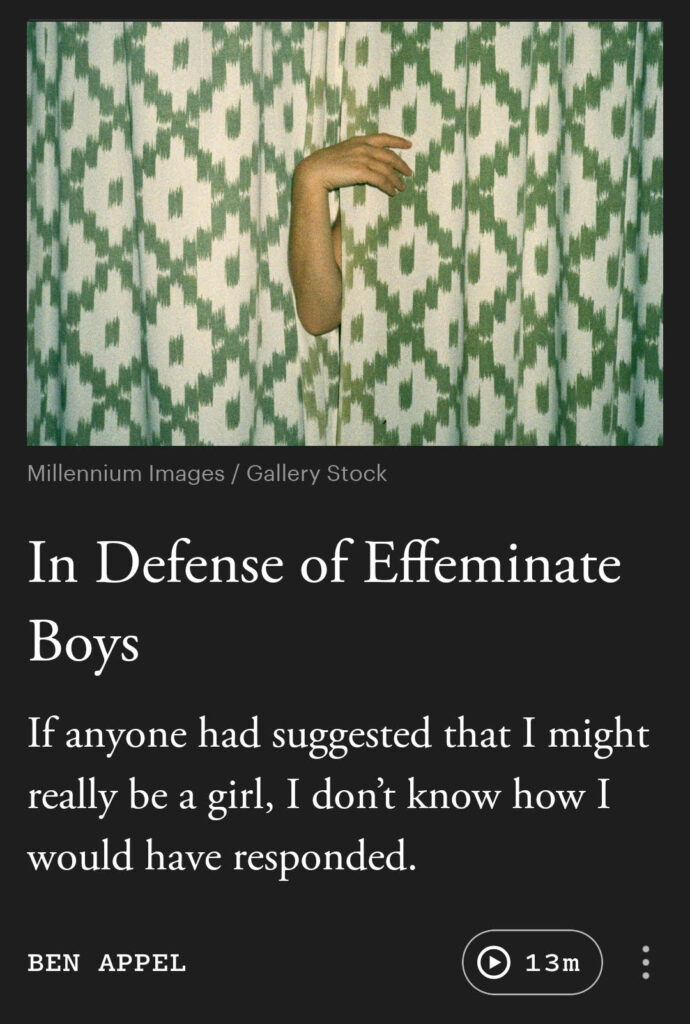
    I have been fond of The Atlantic for years. I consider it a slightly left of center publication that does a fantastic job writing complex articles that are based on valid research and expert analysis. Then I came across this article in the most recent edition of The Atlantic. This opinion piece published under the subheading of IDEAS was written by Ben Appel.

    Ben Appel is a New York based writer who is best known for his gender-critical memoirCis White Gay: The Making of a Gender Heretic. Ben Appel is a gay man and a noted transphobe. Appel is a vocal participant in many anti-trans forums from Genspect, a SPLC-designated hate group, to his gender-critical podcast of 2024,  Informed Dissent. Based on information provided by Transgender Map written and curated by Andrea James, Appel seems to think that his more feminine traits during his childhood would in today’s circumstances cause the medical community to force him to transition. Appel has stated, “I, like a lot of other LGB (and some trans) people, believe that many children and some adolescents presenting at gender clinics today would likely desist and grow up to be gay, lesbian, or bisexual if they were given proper emotional support. In other words, in many cases, the medicalization of “trans kids” might actually be the medicalization of homosexuality.”

    Thus, we have a known transphobe, gender-critical, gay man writing about his dislike of transgender ideas and the need for transgender erasure in one of the most academically rigorous magazines for the general population. How are we as transgender individuals supposed to take this article.

    First, I would hope that his article does not reflect the feelings of The Atlantic in general but just the opinions and beliefs of the writer. I also hope that The Atlantic published this article is some vain belief that they were covering both sides of a debate. However, when an argument is made about transgender people receiving medical care or their beliefs about their identities without talking to any transgender people, physicians, psychologists, or even referencing peer-reviewed literature, the unbalanced approach of this article in The Atlantic is more telling. Major professional organizations like the American Medical Association, American Academy of Pediatrics, and the Endocrine Society have all issued statements supporting gender-affirming care for minors and adults. Ben Appel’s opinion exaggerates a scenario that research sourced from these institutions suggests is relatively uncommon. Gay kids, fem boys, and masc girls are not forced or coerced into transitioning. There are so many gatekeepers (psychologists, physicians, and clinics themselves) to receiving transgender care, children and youth are more often pressured to not transition or to wait to transition until they have already passed puberty.

    The evidence that no one would force Ben Appel to transition if he were a child today is the recent statistics on people who detransition. If children and young adults were routinely forced to transition, we would expect a high number of people detransitioning later in life. However, recent studies from Advocates for Trans Equality and other large meta-studies put detransition rates at approximately 1%. In addition, many of those who did detransition did so because of family or social pressure. Thus, the entire basis of this article is proved false. Ben Appel, doesn’t allow that just like sexuality, gender is not a choice. Appel, a gay man, would surely agree that sexuality is not a choice, but would vehemently deny that gender is not a choice, either. Appel doesn’t seem to understand that if he, as a child, still thought of himself as a boy, no one would force him to change his gender.

    In the end, I can emotionally understand one man’s bigotry against trans individuals. What I can’t understand is how The Atlantic Magazine’s allowed Ben Appel to frame trans issues. Appel’s article and the publication of this article reinforce conflict framing of transgender people and transgender issues. I would suggest that all trans people are tired of magazines, journals, politicians, etc. treating trans people as a legal controversy, a political issue that must be solved, or a culture war debate with transgender individuals as the pawns of these games. Transgender people are seen not as people living lives but as a problem for society to argue about. This article reinforces the constant argument about trans existence. Do transgender people have the right to exist in society or not? This most recent article by The Atlantic would suggest: no.

  • The Lack of Fight

    Living masked in a gendered world

    So much of who I am can be placed at the feet of my gender and sexual identity. When I was a kid in the 1980s, I remember watching the political and street fights occurring in the San Francisco area regarding gay rights and HIV prevention. Every night a news anchor would terrify us with death statistics, ways gay people were a danger to society, and how AIDS would kill us all.

    I bought into this belief because I was still just a kid, and no one explained anything different. When you live in a small, rural town outside the Bay Area, access to gay lives was not a daily event. We talked about gay men and only gay men in school, because the school administration decided gay men were the threat to the societal health and the physical health of the community. Lesbians were never considered, nor were bisexual, or transgender persons. LGBTQ+ at that time was just G. I only knew one gay boy at school, and he only stayed one semester. To me, everyone else in school was straight and cis, since that’s how they presented. Thus, I was the odd man out because I was a gender non-conforming ‘girl’. Almost every week, someone, whether it was a student or teacher would have a talk with me about my seemingly masculine behavior and dress.

    “Wear a dress!”

    “Boys will never find you attractive.”

    “Sit with your legs together!”

    “Don’t be so opinionated. Boys don’t like that”.

    It was a never-ending barrage of advice and criticism that started in elementary school, ramped up in junior high, and stayed that way until college.

    In high school, I made an effort to try and ‘girl’ correctly. I decided to put on a cisgender, straight ‘girl’ mask and be ‘normal’. However, I didn’t have a rule book to even know how to begin. I followed along with my friends, and if I had the energy, I would do what they did: bought the right kind of clothes, listened to the correct music, etc. But in the process of going through high school, I was slowly killing myself. I felt like I was disappearing into the walls, becoming invisible behind my mask. Strangely, because I ended up feeling so badly about myself, I actually wanted to disappear. I wore this invisible ‘girl’ mask to school every day. It was a badly performed mask, but it was the best I could do. But that mask ate at my authenticity and self-esteem. I spent the last two years of high school feeling like I was floating through a bad dream rather than living life. I did what was expected of me; I got good grades, teachers liked me though rarely remembered me since I was nearly invisible, I participated in school and friend activities as needed. I hated the whole experience.

    What I taught myself that day before freshmen year started when I purposely put on the mask, was that I was not good enough as I was, that I needed to change to gain acceptance and friends, especially the attention of boys. However, by putting on this mask I achieved nothing good. When I had friends, I didn’t feel they knew the real me. When I finally got the attention of boys, I couldn’t understand what they saw in me. The mask hid me so well, that by the end of freshmen year, I didn’t even know what I wanted or needed anymore. Who was attractive? Who was a healthy friend? Were my behaviors appropriate enough (they weren’t). So in the end, I poorly hid my gender non-conformity, but effectively hid myself from the entire world, even myself.

    It has taken years to overcome this shame society and me gave to myself. It took just an instance to put on the mask, but decades of work to take it back off. In fact, I didn’t come out as transgender and gay until I was 48 years old. I had better self-knowledge of my gender at 8 years old then I did at 20 years old. Years of hiding who I was out of fear of what others would think or fear that I would die of HIV crippled my inner self. The mask I put on before my freshman year ate any attempt I had at being a real human being. It consumed my attention, my active joy, my self-esteem, and nearly my very life. I lost the ability to fight for myself and see myself as a person deserving of love, autonomy, and happiness.

    Today I see kids in this very hostile political climate stand up to society and peer pressure to be themselves. With the help of their families, friends, and support groups, these kids are seeing the joy and vibrancy in life that I missed out on because of fear. I am jealous of them and so happy for them in equal measure. Being the gender they are and being supported in achieving their gender is a profoundly hopeful way to live. And, guess what? These kids will get a chance to live an authentic more joyful life than I did. Will it be perfect? Of course not. But it will be real, they will be real, and that will make all the difference in their lives.

  • Bring the Heat Protest

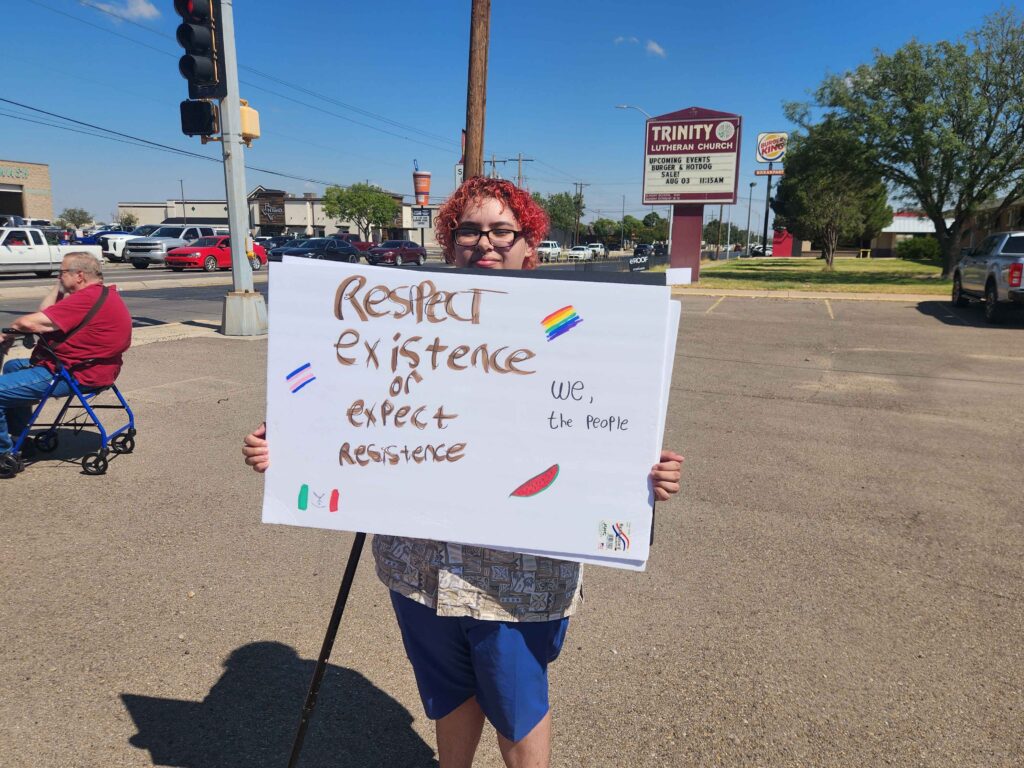
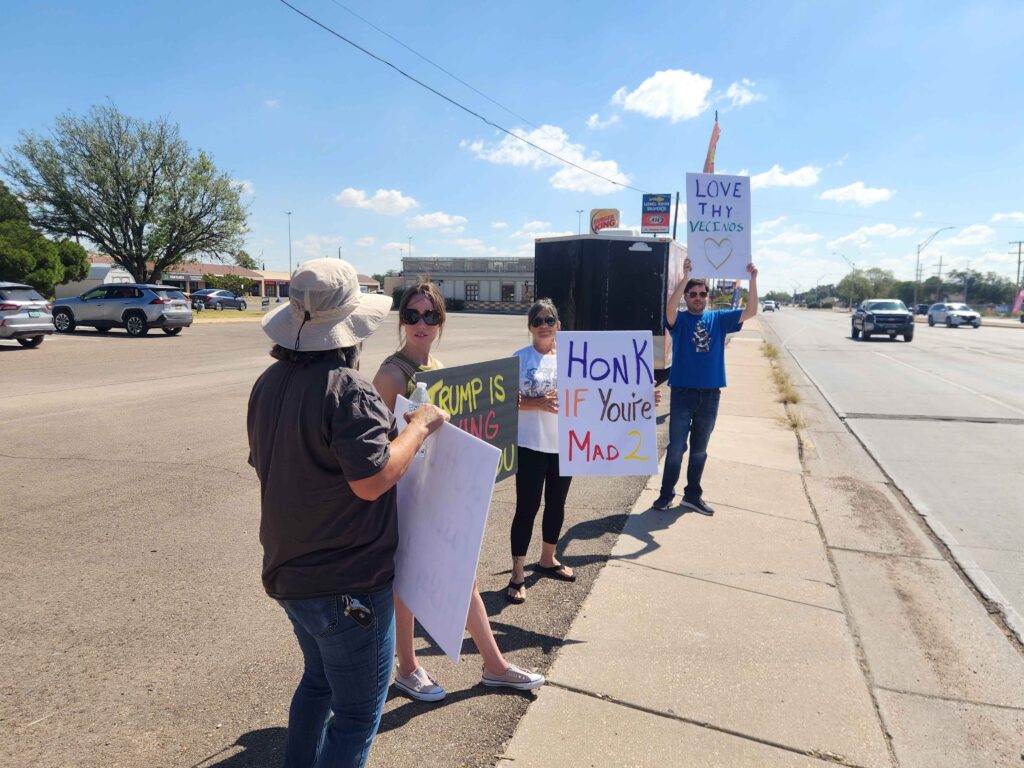
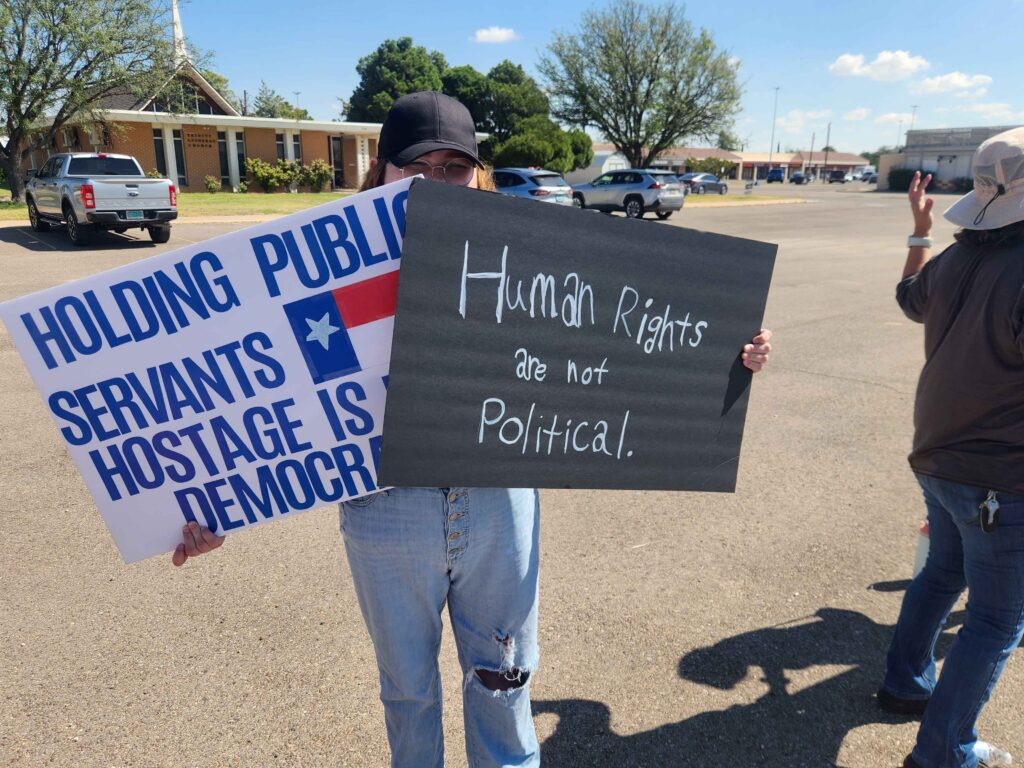
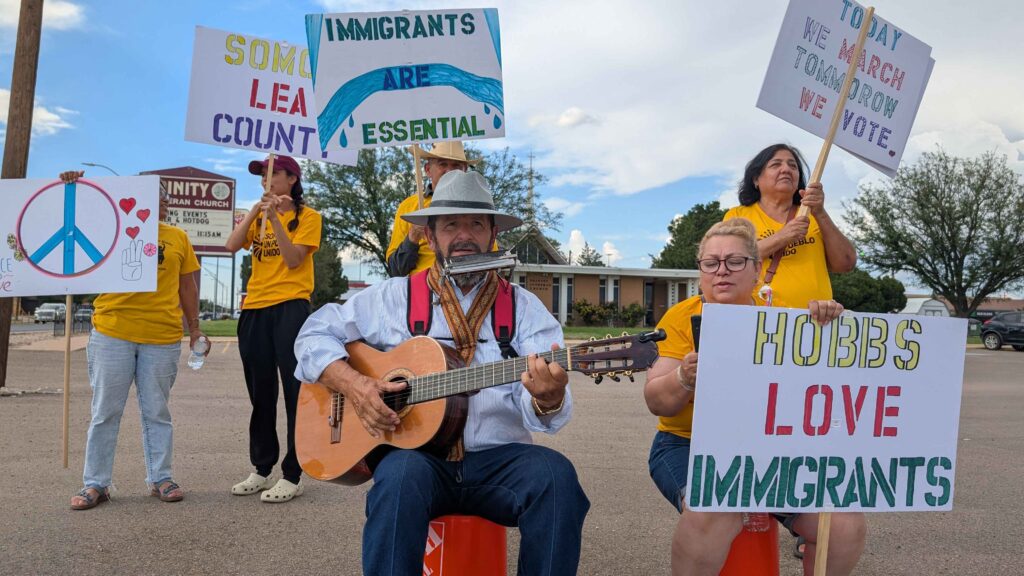
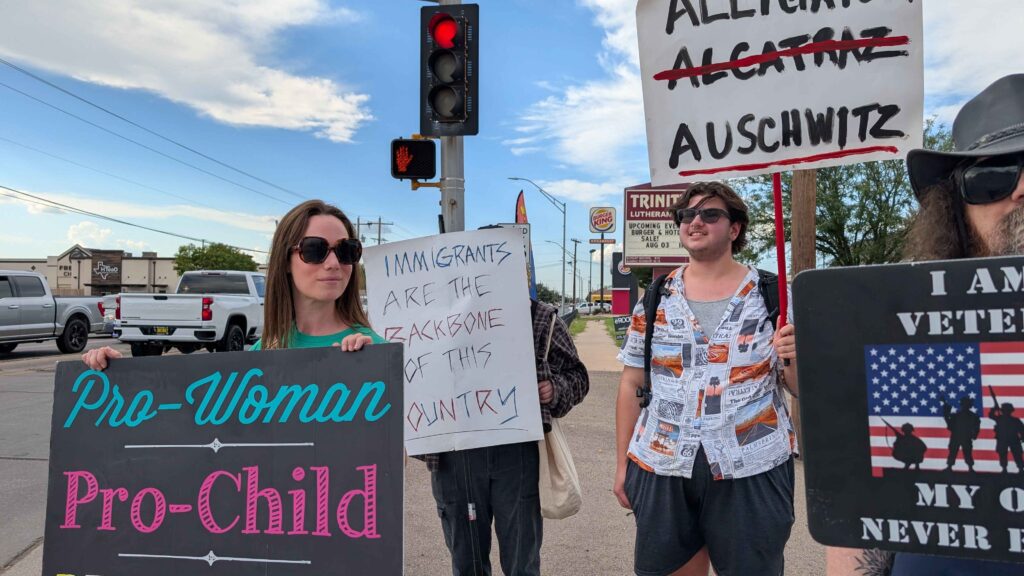
    Trump’s authoritarian take over of America in an ongoing process. To fight it is like trying to drink water from a fire hose. And yet, we must. Everyone, even those who are MAGA, will find themselves in dire circumstances if Trump ever succeeds in turning the USA into Russia or Hungary. Though we have been far from a perfect county even before Trump (capitalism, racism, lack of health care, oligarchic tendencies, etc.), we have had some privileges from having our Bill of Rights and a Supreme Court that took pains to maintain those rights. But the Supreme Court has let us down and some of our elected officials just roll over for Trump. So to remind people that their very rights are on the line, that, though not perfect, we are a much better country than Trump shows, Lea County Pride takes to the streets. If people in Lea County see that there are others that care about the state of the USA, maybe they, too, will step up to call their representatives, sign petitions, and most importantly, vote.

    On August 23rd, 2025, Lea County Pride organized a “Bring the Heat” protest to keep Lea County aware of the dangers Trump and his policies. It is August and hot, but we were there.

    Come join us for the next one!

    Here are some photos of the Bring the Heat protest in Hobbs, New Mexico.

  • Protest in memory of John Lewis

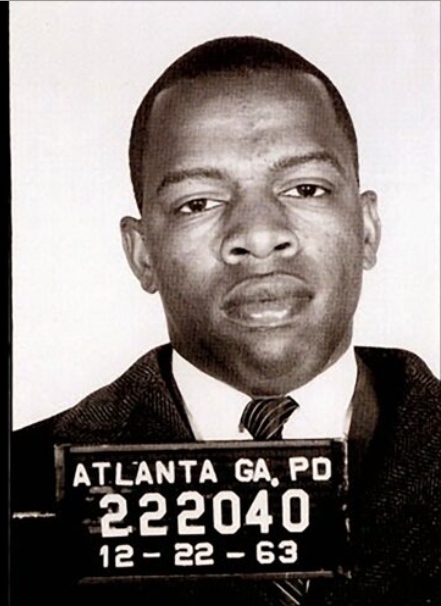
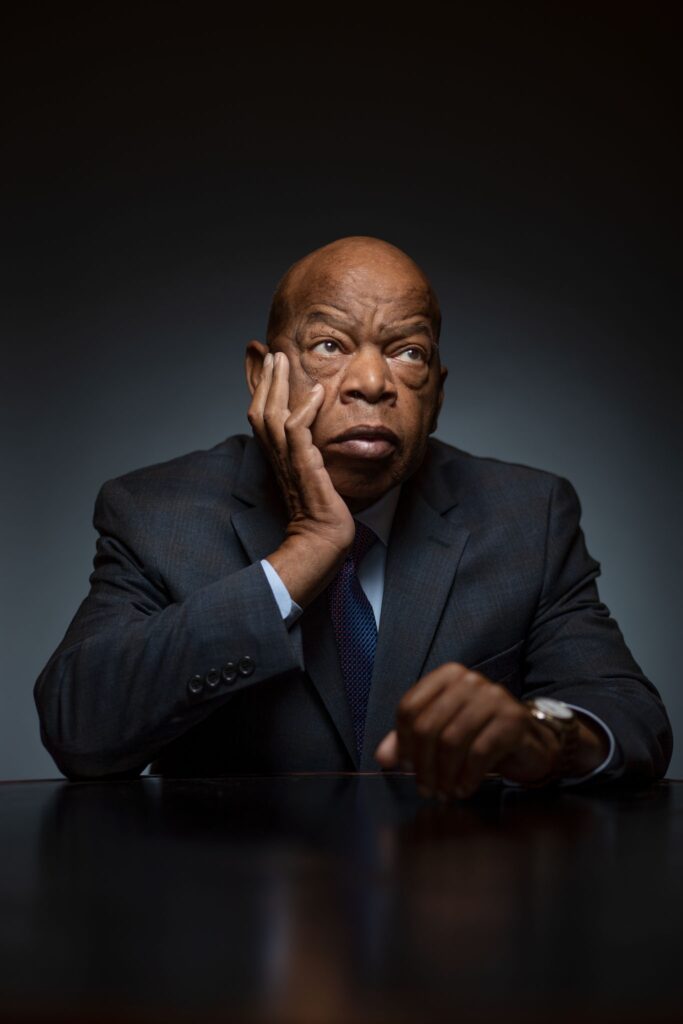
    Lea County Pride hosted a second protest against Trump, ICE, and the rest of his administration on Friday, July 25th in Hobbs. This national protest was in honor of John Lewis. Lewis was an American civil rights activist and politician who served in the United States House of Representatives for Georgia’s 5th congressional district from 1987 until his death in 2020. He participated in the 1960 Nashville sit-ins and the Freedom Rides, was the chairman of the Student Nonviolent Coordinating Committee (SNCC) from 1963 to 1966, and was one of the “Big Six” leaders of groups who organized the 1963 March on Washington. Fulfilling many key roles in the civil rights movement and its actions to end legalized racial segregation in the United States, in 1965 Lewis led the first of three Selma to Montgomery marches across the Edmund Pettus Bridge where, in an incident that became known as Bloody Sunday, state troopers and police attacked Lewis and the other marchers.

    A member of the Democratic Party, Lewis was first elected to the U.S. House of Representatives in 1986 and served 17 terms.

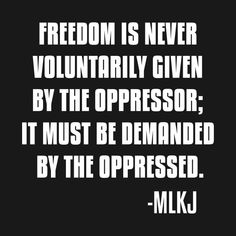
    In his memory, let’s remember one of his famous mottos: “Do not get lost in a sea of despair. Be hopeful, be optimistic. Our struggle is not the struggle of a day, a week, a month, or a year, it is the struggle of a lifetime. Never, ever be afraid to make some noise and get in good trouble, necessary trouble.”

    Members of Lea County Pride and Somos un Pueblo Unido joined together to raise awareness of the problems caused by this administration to the LGBTQ+ community, the immigrant community, and all others who live under this regime. Although it was 97 degrees outside and it was a Friday afternoon, a number of people showed up to protest the Trump administration.

    If you are able, please take a stand against this administration. The illegal detention of undocumented and documented immigrants is appalling. People, all people, do not deserve to be disappeared by people wearing masks, who have no warrants, into a system where they have no legal rights. This system is stacking people into cells made for two people, given little food, and no healthcare. These people are actually dying. Please, if you are able either write or call your federal and state representatives to end the Naziesque treatment of humans. See the Resources page to determine who your representatives are.

  • Happy birthday to David

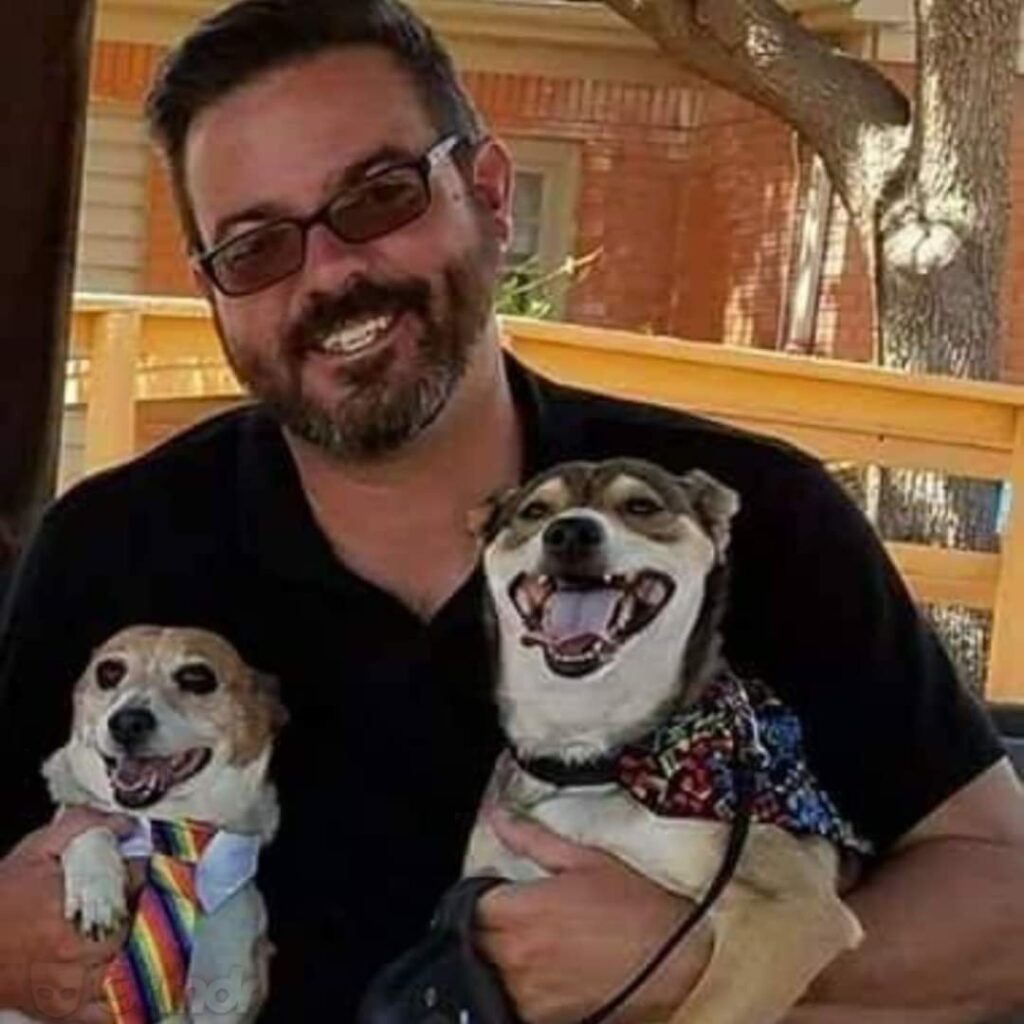
    Happy birthday to one of Lea County Pride’s founders, David Raines. David left us much too soon. We miss you, mate. RIP

  • Deb Haaland visits Lea County

    On Saturday, July 19th, 2025, gubernatorial candidate, Deb Haaland came to Lea County to talk to the members and visitors of the Democratic Party of Lea County about her campaign. Given that the community at large did not receive prior information about her appearance here in Hobbs, a good number of people did show up to see her. Deb gave a short speech regarding her background and her qualifications for governor (e.g. she was a child of two service members, one a Marine, the other the Navy, her time as a poor, single mother who needed to use Medicaid and SNAP, her Native American and Norwegian heritage, her transgender child, and her time as a Congresswoman and then as the United States Secretary of the Interior).

    Deb then answered questions from the audience. It was obvious that Deb does not yet have a cohesive plan for the future, but since the election in more than a year away, that is expected.

    There were a few things that occurred during her speech that those from Lea County Pride might find interesting.

    1. Deb, as a mother of a trans child, is very pro-LGBTQ+ and will do all in her power to keep LGBTQ people in New Mexico safe and protect our rights to fair and equitable treatment in all facets of our lives.
    2. Deb also expressed interest in talking to Lea County Pride via Zoom to discuss our needs and concerns with her.
    3. Clayburn Griffin, the Vice-Chair of the Democratic Party of Lea County and a member of Lea County Pride, noticed that somewhere between a third and a half of the people who attended Deb’s talk were members of Lea County Pride. In fact, it seems that a majority of active members of the DPLC are of the LGBTQ+ community. How cool is that?!

    If you are interested in learning more about Deb’s run for governor of New Mexico for the Democratic Party, check out her website here.

    Finally, here are a couple of pictures of Lea County Pride members taken with Deb at the event.

    Jackson, Clayburn, and Sam listening to BJ talk to Deb
  • Summer BBQ and Swim Day

    July 5th was our annual Lea County Pride BBQ and Swim Day. This year, we decided to add an end-of-the-day fire pit. Although the day was warm, everyone had a good time either playing in the pool, hanging out with friends, or both. This year the BBQ decided to die on us, so everything had to be cooked inside. No matter; the food was good. Thank you to everyone who brought food, helped decorate, and take down the party. You rock!

    Here are a few pictures of members chilling around the fire at the end of the party.

    Stephen, Emma, and Sam

    Stephen, Emma, and Sam

    Sam, Emma, Matt, Polly

    Jackson