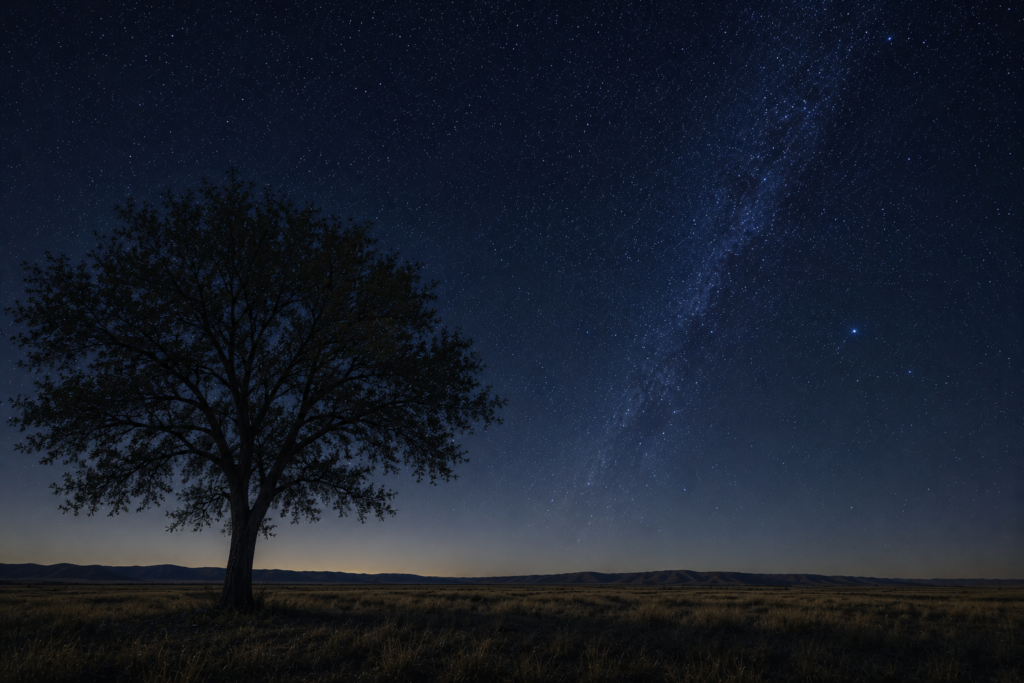
There are many early mornings when I wake up even before the oil field people start their day. It is deathly quiet outside. There are no cars, or birds singing. The neighborhood skunk is down for the night, and my cats are asleep in their nests around the house. My husband has disappeared under his blanket again, so I can’t even hear him breathing.
It is so quiet, that all I can hear are my thoughts playing silly buggers in my head. It is an easy time to think this early in the morning. There is nothing to distract my thoughts, so they feel free to wander around to whatever interests them.
A couple of days ago, however, I did get caught up in a loop of imagination, which was strangely tied up in philosophy, sociology, and psychology. As I laid there in the dead of night, I wondered if being all alone still made me transgender? Weird thought, I know. But I became interested in this idea: when and where are we transgender? Not transgender to others, but to ourselves.
Understand that I spend almost every day in a dark room being very chronically ill. I rarely see anyone except my husband, and I talk to my mother on the phone every few days. That’s it. So, if you are transgender in a dark room and no one is there to see you or hear you, are you still transgender?
I didn’t really have an answer to this that morning. When I am by myself, I don’t think about my gender at all. I am just me. I don’t have to worry about social media trolls or passing in public. I am just the thoughts in my head and bodily feelings. So, who am I when I’m alone? Am I just an amorphous blob of biology, shooting electrical and chemical signals around as my body tries to regulate itself? Or am I really something distinct even when I’m away from all people, lights, and sounds?
Put me outside in the world, even just around my husband, and I am a man. I am totally inhabiting a space that is male. My maleness colors every aspect of my life: how I walk, talk, deal with situations, everything. Even alone when I can hear cars and birds and the kids walking home from school, I am a man. That feeling of manliness coats even my sick bed then. But take away the light, the sounds, the very essence of life except that which is me that exists in the middle of the night, and then – who am I? Does my name matter anymore if no one is there to say it? Does my illness? Does my gender?
Days later, and after much thought, I decided on an answer. An answer that at least suits me. Yes, I am a biological being with both electricity and chemicals running my systems. And yes, I am very sick. For many, I would hypothesize it is easy for them to say that identity doesn’t disappear when they are alone. However, if you have been alone for decades without much stimuli except the physical pain and exhaustion which have become the primary focus of life, it is easy to get trapped in the belief that who and what you are is just sickness.
“I am sick; therefore, I am?” Descartes shudders.
After being alone in the dark day after day, it becomes easy to feel like I’ve devolved into a blob that can’t see beyond my sickness. I am not Jackson, I am ill. I am not smart, I am sick. I am not anything, because all I am is ill. It’s an easy trap and an understandable trap to fall into when you are that ill. I would suggest that if a person is constantly chased by a lion, they, too, don’t worry about their existence, because their existence has been focused down to, “Escape this fucking lion!” Ongoing fear and pain do a great job on focusing your mind on that one experience – whether it be lion or chronic illness. In either scenario, one doesn’t spend a lot of time worrying about whether their gender designation matches their internal cognition or self-awareness of their gender. But, too, in either situation, you don’t often worry about being hungry or if you have to pee. Escaping from the situation becomes the entire focus of life. Based, on this philosophy, the person running from the lion would then have no gender, either. And that is where my argument falls apart, utterly specious.
So, then what? Gender has social dimensions. In fact, some sociologists suggest that much of what we consider gender is a social construct. But even if that is true, most people do have some relationship with gender outside their social world. My mom buttering her bagel in the morning is certainly not thinking about her gender. But she doesn’t stop being a woman just because no one is there to see her. So, the question stops being – am I transgender or male when I am sick and alone at home, but instead becomes – if I am isolated and disconnected from social interactions, and not actively performing gender in the world… what does my gender mean to me?
This is not uncertainty about my gender, so much as the heavy weight of constantly being severely ill. If no one is around and I am simply “me”; though not actively aware of gender, that cannot imply my gender vanished. Instead, it is buried under the constant onslaught of exhaustion and pain. Chronic illness takes away so much of who a person is. Often, the existence of chronically ill people is just pain and exhaustion. There are many days where my only thoughts are to distract myself from these constant companions. Instead of making plans, or counting blessings, or remembering to call my mom, I am immersed in an audio book so that I don’t have to live my life. Distraction keeps me from death. And thus, it is easy to forget that I am me, Jackson, not an illness.
Long-term illness can perform this kind of identity erosion. Not a dramatic explosion of loss, just a wearing away. Tiny repetitions:
too tired for that.
maybe next month.
can’t risk the crash.
not today.
what’s the point.
And one day you look around internally and realize whole rooms of your identity have gone dark as another year has passed.
Except, later, you lie in bed and try to determine who you are when you are alone and refuse to be defined by just the word “sickness”. I realized that being sick did not steal my self-hood from me, just my ability to express my self-hood. It is a concept of range in my self-hood that has changed over the years. I have lost my ability to participate, my mobility, and the comfort of relaxation. And yes, I feel that enormous loss, sometimes to the point of tears. What I lost is part of the range of self-expression, but not the entire range. Just because my life has gotten much smaller does not diminish my existence in and of itself. I am still a queer curmudgeon. I am still trans, male, autistic, funny, loyal, etc. So even as I am alone and it is difficult to see myself without being reflected back by another, these qualities didn’t just disappear. I still exist. I still am.
So, as I write this in the quiet darkness of the deep night, I must remember to take comfort in the knowledge that I exist, regardless of who sees me. I see myself and I know myself. That, I must remember, is perfect enough.
Leave a Reply